



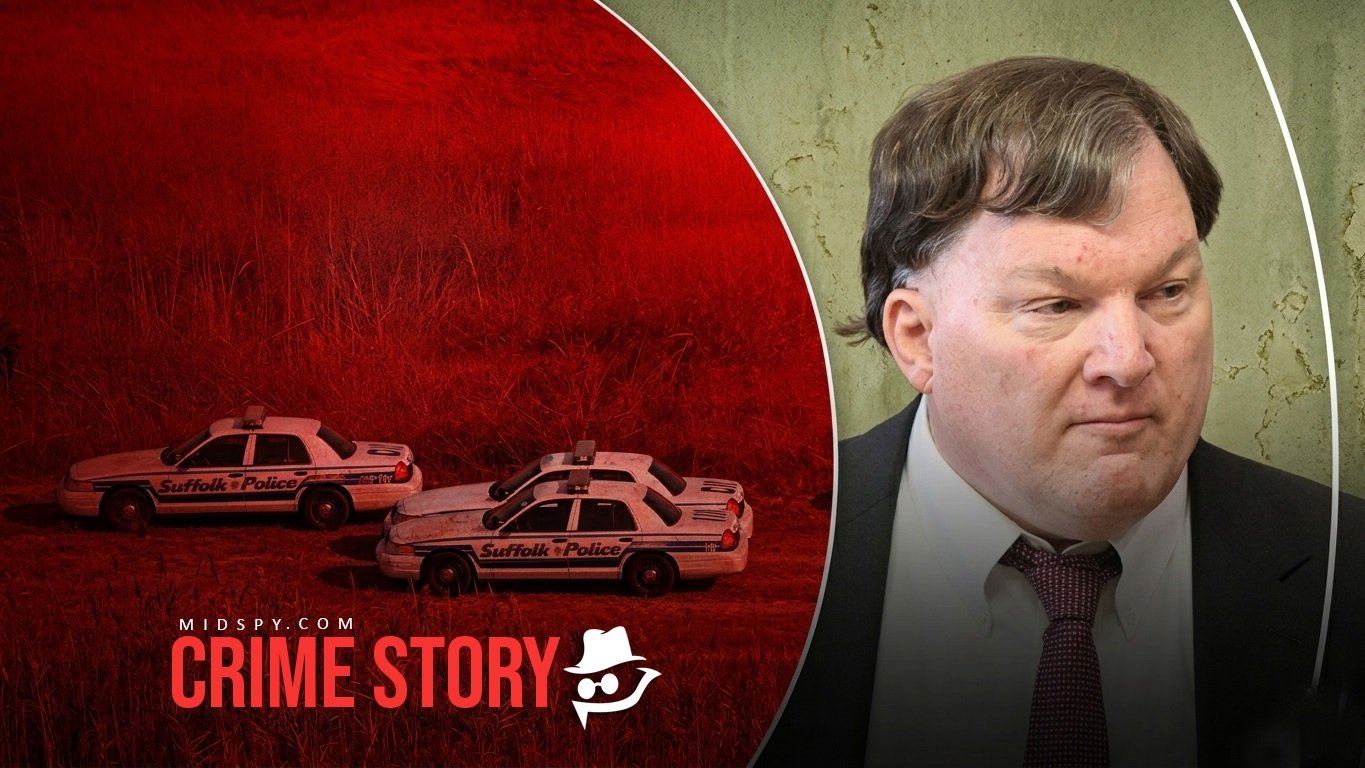
For more than a decade, the Gilgo Beach Murders haunted Long Island. They captivated the American public with their chilling details, investigative failures, and the devastating human cost borne by the victims’ families. The case, one of the most disturbing Gilgo Beach Serial Killer investigations in modern American history, reached a pivotal moment when Rex Heuermann, a 62-year-old architect from Massapequa Park, New York, stood before a Suffolk County judge and confessed to strangling eight women and dumping their remains along a desolate stretch of beach.
The confession brought a measure of closure to grieving families but also raised deeply uncomfortable questions about how long justice was delayed, and why.
The Courtroom Confession That Ended Years of Uncertainty
The scene inside the Suffolk County courtroom was one of stark, unnerving calm. Heuermann, a physically imposing man standing 6 feet 4 inches tall, appeared dressed in a black suit and blue tie, his face expressionless as he stood before Judge Timothy Mazie. He answered the judge’s questions mostly with a single word, “yes”, confirming methodically that he had bound, strangled, and discarded each of his eight victims in the same calculated manner. He never once looked toward the families of the women he had killed, who sat in the courtroom after years of waiting for this exact moment. When asked specifically how he had committed the murders, the Gilgo Beach serial killer offered nothing more than the word “strangulation.” When asked about his guilt, he said: “Guilty.”
John Ray, an attorney representing multiple victims’ families, was unsparing in his assessment following the hearing. He noted that there was not a single trace of remorse on Heuermann’s face, describing the man as completely ruthless. The court subsequently sentenced Heuermann to multiple consecutive life sentences, with formal sentencing scheduled for June 17th.
Who Were the Victims of the Gilgo Beach Murders?
At the heart of the Gilgo Beach serial killer case are eight women whose lives were cut short by a predator who targeted them with cold, systematic precision. Rex Heuermann was initially charged with the murders of seven women before also confessing to a killing that occurred in 1996, bringing the total to eight confirmed victims. The women he murdered were Melissa Barthelme, aged 24; Megan Waterman, aged 22; Amber Costello, aged 27; Maureen Brainard Barnes, aged 25; Jessica Taylor, aged 20; Valerie Mack, aged 24; Sandra Costella, aged 28; and Karen Vergetta, aged 34.
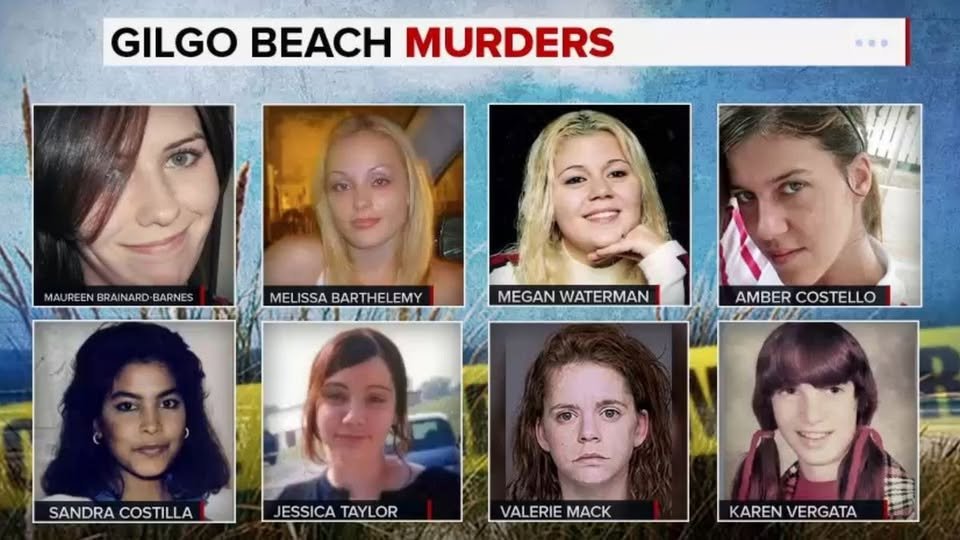
All of the women are believed to have been engaged in sex work at the time of their deaths. Heuermann reportedly made contact with some of them through advertisements they had posted on Craigslist, luring them with the promise of money before killing, dismembering, and disposing of their remains along the Gilgo Beach shoreline on Long Island’s South Shore.
During the court hearing, Heuermann provided no new specific details about how each killing unfolded. He confirmed only the general pattern: he lured the victims to his home, killed them by strangulation, dismembered their bodies, and dumped their remains on the beach. The mechanical nature of his confession, stripped of any emotional reflection or acknowledgement of the humanity of his victims, only deepened the grief of the families who had spent years seeking answers.
How the Gilgo Beach Murders Were Discovered
The discovery of the Gilgo Beach murder victims was itself wrapped in tragedy and coincidence. Authorities first stumbled upon the remains in December 2010 while searching for a different missing woman, Shannon Gilbert, a young woman who had called 911 in the early hours of May 2010, screaming that people were trying to kill her. While combing the thick brush and marshy terrain near Gilgo Beach, investigators discovered the skeletal remains of four women within just a quarter-mile radius of one another.
As the search expanded over the following months, more remains were found, some belonging to the identified victims, others still unidentified, stretching across a broader section of the barrier island.
Shannon Gilbert’s case remained separate and contested. Police ultimately concluded that they did not believe Heuermann killed her, and that her death was likely the result of an accidental drowning in the treacherous swamp terrain near Oak Beach after she fled from a resident’s home in a state of panic. Elaine Colletti Edwards, who was present in court representing her late father, the man who had briefly let Gilbert inside his home that night, said she had long hoped that Shannon had somehow escaped and was hiding somewhere safe. Her father never lived to see Heuermann’s arrest.
Rex Heuermann: The Architect Behind the Mask
The arrest of Rex Heuermann in 2023 shocked the quiet suburban community of Massapequa Park, a Long Island town of roughly 18,000 residents. Heuermann had lived there since childhood, spending his formative years in a dilapidated house that locals later noted stood out in the neighbourhood for its deteriorated condition and mismatched red and green windows. He later moved to the area with his then-wife in 1995 and continued his life there largely unremarkably, working as a licensed architect with an office in midtown Manhattan.
To the outside world, Heuermann was a married father of two who blended into the fabric of suburban Long Island life. His arrest came as a result of DNA evidence, specifically, genetic material traced back to a discarded pizza box. Police matched DNA from hair found on the victims’ bodies to the DNA recovered from the pizza Heuermann had eaten and thrown away. It was a forensic breakthrough that became the linchpin of the prosecution’s case. Authorities also found disturbing additional evidence in his basement, including written instructions stored on his computer detailing methods for committing murder.
His childhood home in Massapequa Park has since become a focal point for media coverage and true crime enthusiasts, drawing crowds of reporters and curious onlookers. True Stories of crimes this disturbing and close to home rarely emerge from quiet American suburbs, and the community’s response was a mixture of disbelief, unease, and a desperate desire to move on.
A Tip Ignored for Years: The Failures of the Investigation
Perhaps the most troubling dimension of the Gilgo Beach murder mystery is not simply that Heuermann evaded capture for so long, but that investigators had a meaningful lead pointing in his direction almost from the very beginning and failed to act on it for more than a decade.
Shortly after Amber Costello’s disappearance in 2010, her roommate Dave Schaller came forward with a description of a man he had seen interacting with Amber just before she went missing.
The man had made Amber uncomfortable during a previous encounter. Schaller described him as an exceptionally large man who resembled an “ogre,” and noted that he drove a Chevrolet Avalanche, a distinctive, relatively uncommon vehicle. This description was specific enough to have narrowed the investigation considerably, yet the lead languished.
The failures in the investigation were not merely procedural. The victims’ families and advocates have alleged that authorities did not treat the case with the urgency it deserved because the women involved were sex workers. Families say that officers repeatedly referred to the victims by their profession in a manner that implied their lives were of lesser value.
This allegation struck a raw nerve among Long Island residents who followed the case closely. Ellen Muñoz, a resident from a neighbouring town who was present at Heuermann’s hearing, was direct: the women killed were not inferior, she said. They were doing what they had to do to survive.
The internal dysfunction within the Suffolk County Police Department compounded these failures. Former Police Chief James Burke, who had oversight of the case during a critical period, was arrested in 2015 and later convicted on multiple charges, including obstruction of justice. Suffolk County District Attorney Thomas Spota, who led the district attorney’s office from 2002 to 2017 and was nominally overseeing the Gilgo Beach murder investigation during that stretch, also faced serious legal jeopardy and ultimately fell from power amid scandal.
The Task Force That Finally Caught the Gilgo Beach Serial Killer
It was not until 2022, under new leadership at the Suffolk County Police Department, that the investigation into the Gilgo Beach murders was fundamentally restructured. A dedicated multi-agency task force was established, bringing together federal and local law enforcement resources and applying fresh analytical eyes to years of accumulated evidence. The results were dramatic: within just six weeks of the task force acting on old leads, including Schaller’s decade-old description of the suspect, investigators had identified Rex Heuermann as their primary person of interest.
Police began surveilling Heuermann and reviewing records associated with burner phones that had been used to contact several of the victims. They analysed cell phone tower data to geolocate those devices. Finally, the discarded pizza box provided the DNA confirmation needed to move forward with an arrest. Heuermann was taken into custody at his Manhattan office without incident.
A Community Searching for Closure
In Massapequa Park, the aftermath of Heuermann’s arrest and subsequent guilty plea has left the community in a complex emotional state. His ex-wife, Asa Elrop, the couple divorced following his arrest, was present in the courtroom during the guilty plea hearing, dressed in black and accompanied by their daughter, who was seen holding a tissue. Elrop had no visible expression on her face. Speaking outside the courthouse afterwards, she offered that her thoughts were with the victims’ families, calling their loss irreparable.
She has faced scrutiny of her own. Reports emerged that Elrop had, at one point, despite divorce proceedings, referred to her husband as “her hero.” Valerie Mack’s son, Torres, has filed a wrongful death lawsuit against Heuermann and his family, and his attorney has sought to examine financial benefits the family may be receiving in connection with documentary projects. Police have stated they found no evidence implicating the Heuermann family in the crimes, and Elrop’s attorney has publicly reiterated that on multiple occasions.
Neighbours in Massapequa Park, those who drove past his childhood home every day without suspecting anything, describe a creeping sense of unease that lingers even after his confession. As one longtime resident who requested anonymity put it, the house had always looked different from the rest of the neighbourhood, but you never think much of it. You don’t really know anyone, he added, a sentiment that has echoed across the community as residents process what happened in their midst.
The Long Island Mystery That Still Has No Complete Answer
Even with Rex Heuermann’s full confession, the Gilgo Beach murders have not been entirely resolved. Questions remain about whether additional victims may yet be discovered. Investigators have never definitively identified all the remains found along the barrier island, and the area’s dense marsh, scrubland, and remote stretches of beach make comprehensive searches difficult.
Sandra Simon, a high school classmate of Heuermann’s who now spends summer weekends at nearby Hemlock Cove, the anchorage close to where Heuermann allegedly dumped his victims, captures the lingering unease of those who lived through this era of fear. She says she often thinks about the women whose remains were found there. Sometimes, she says, people in boats joke darkly about whether there might still be more bodies hidden in the swamp. But it isn’t really funny. “How can you live without thinking about them?” she says. “It was a horrific, terrifying event.”
Why the Gilgo Beach Murders Case Still Matters
The story of Rex Heuermann and the Gilgo Beach murders is ultimately about more than one man’s crimes. It is a true crime story about the systemic failures that allowed those crimes to continue unchecked for years, including a culture within law enforcement that, as the victims’ families allege, valued some lives more than others. It is a story about a tight-knit community forced to reckon with the reality that extraordinary evil can exist behind the most ordinary suburban facades. And it is a story about the families of eight women who spent years demanding to be heard, insisting that their loved ones deserved justice, and finally watching a courtroom hear them.
Rex Heuermann will spend the remainder of his life in prison. The formal sentencing will be announced in June. The Gilgo Beach serial killer case will endure in public memory not only as a true crime landmark but as a cautionary tale about what happens when institutions fail the most vulnerable people in their care. Source